


Metal stamping
Custom stamped parts, finished in one order.
- Steel, stainless, aluminum, copper and brass
- Cutting, forming and drawing at high volume
- Plating in the same order
- A price per part, in 24–48 hours
Your parts protected by an NDA.
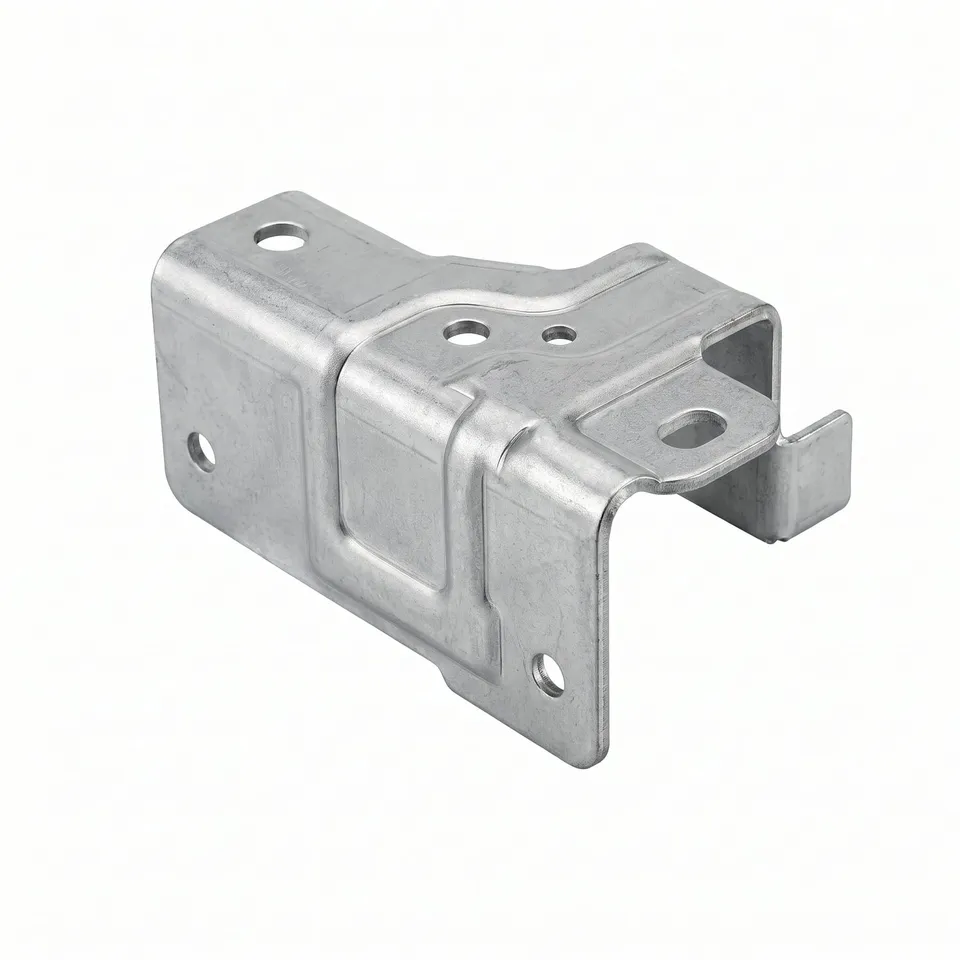 Stamped · steelBlanked, pierced, formed
The die does it all in one stroke.
A progressive die does in one press cycle what would take four machines — and does it again, the same, thousands of times.
Station 01
Blank
The outline cut from the strip.
Station 02
Pierce
Holes and slots punched through.
Station 03
Form
Flanges and tabs bent to shape.
Station 04
Draw
Cups and covers pulled deep.
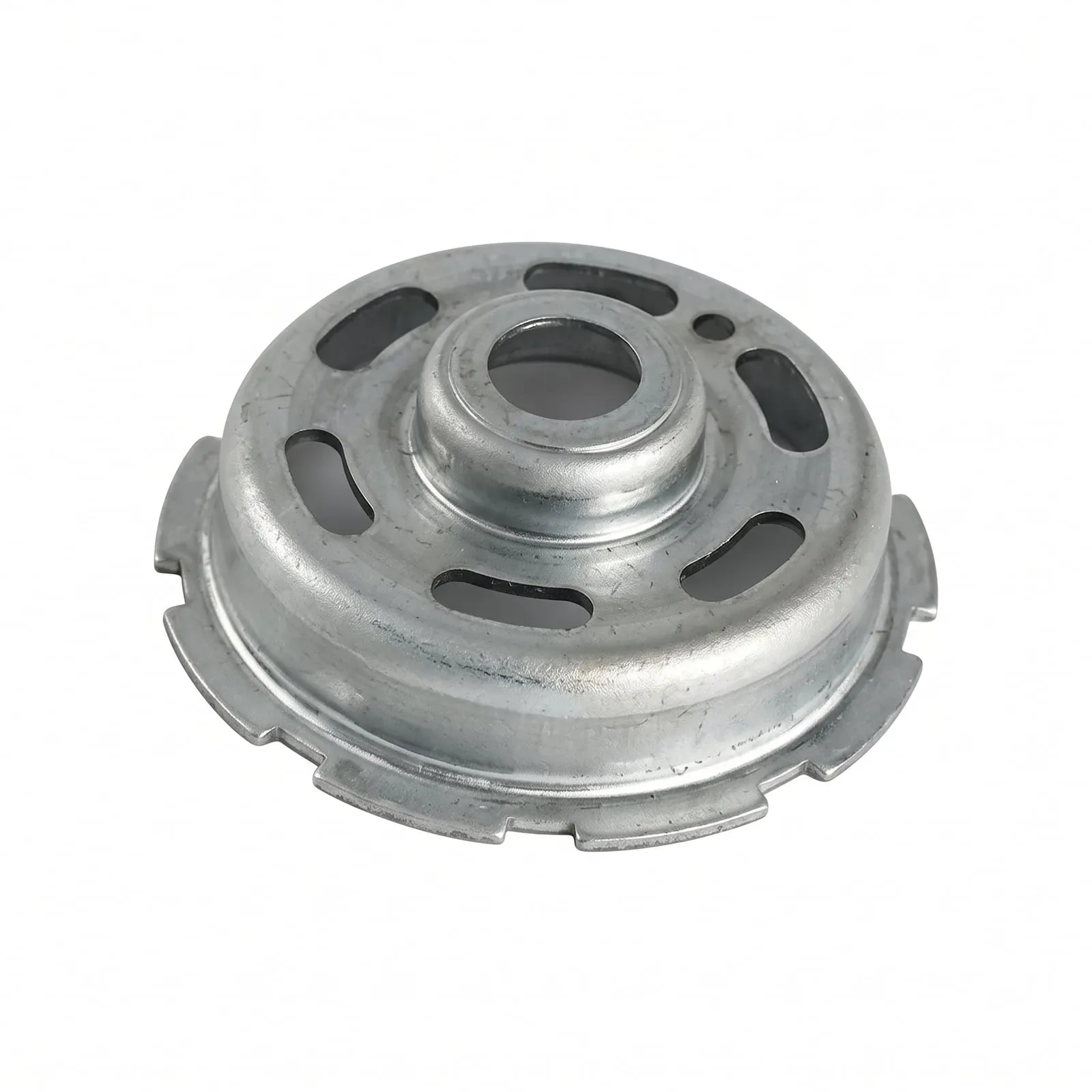
Drawn parts like this cover go through the same line — the strip is pulled deeper at each station until the cup is formed.
When a die pays off
Once the die is made, parts are cheap.
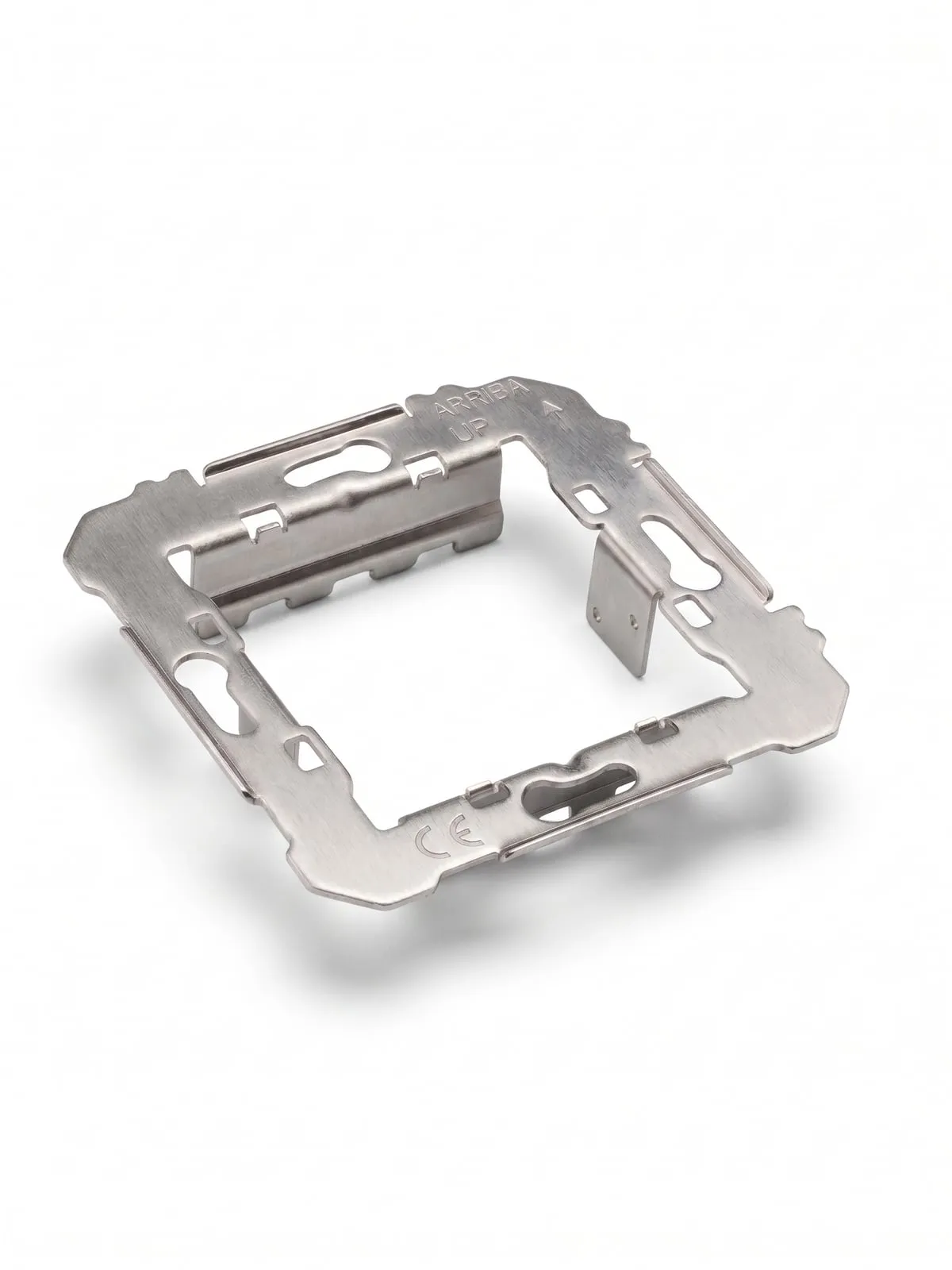 Stamped · steel frame
Metal stamping, defined
Stamping runs sheet metal through a press and a die that cuts and forms it station by station — blanking, piercing, bending, drawing — often in one progressive stroke. Once the die is built, each part takes seconds and costs very little: the process for contacts, clips, brackets and drawn covers at high volume.
What to send
What you send, and what you get back.
The 3D model and the PDF drawing are enough.
Your 3D model (STEP) and the 2D PDF drawing
The model gives the geometry; the drawing carries what the model cannot say: tolerances, critical dimensions and the finish. Material, gauge, quantity and plating are chosen when you upload the part.
A price per part, in 24–48 hours
With the unit price and the lead time of every part; the die is shown apart from the price per part.
If it can’t be stamped as drawn, the change it needs
We tell you before anything is made, and requote it.
Everything about metal stamping
Spec sheet
Materials
Choosing a process
Questions
Questions about metal stamping
How much does a stamping die cost, and how is it priced?
A die is a one-time tooling cost. It depends on the number of stations, the size of the part and whether the die is progressive or transfer. In the quote the die is its own line, apart from the price per part, so you see what the tool costs and what each part costs. It amortizes over the run: the more parts come off the die, the less each one costs.
At what quantity does stamping beat laser cutting and bending?
It depends on the part, the material and the quantity. Below the quantity where a die pays for itself, laser cutting and press-brake bending avoid the die cost entirely; above it, the stamping die’s speed and low price per part win. We look at the crossover with your actual quantity and tell you which route is cheaper.
Who owns the die, and where does it stay?
The die is built for your part and it is yours; in the quote it appears as its own cost. It stays and runs in our shops and is not shipped, so every run comes from the same die. If you need the terms on moving it, ask us before you accept the quote.
What materials and thicknesses can you stamp?
Cold-rolled and stainless steel, aluminum, and copper and brass for electrical contacts — from around 0.1 mm foil up to about 6 mm structural gauge, matched to strength, formability and conductivity.
Can you deep-draw enclosures and cans, not just flat parts?
Yes. Deep drawing pulls flat sheet into cups, shells and enclosures — housings, covers and battery cans formed in the die without a weld. It is designed into the die from the start.
Can plating, finishing and packaging go in the same order?
Yes. Deburring, plating (zinc, tin, nickel), passivation and painting are specified under the same quote, so parts arrive finished, not raw. Assembly and packaging can go in the same order too.
Which files do I need to send?
The 3D model as a STEP file and the 2D drawing as a PDF. The model gives the geometry; the drawing carries what the model cannot say, such as tolerances, critical dimensions and finish. Material, gauge, quantity and plating are chosen when you upload the part. A mutual NDA is in place before you upload any file.
How long does the quote take?
Between 24 and 48 hours from the moment you upload the files, with a price per part and the lead time of each one. If the part can’t be stamped as drawn, we tell you the change it needs before anything is made.
Can I order a single part, or only production runs?
We work from a single part to production runs. A die is built to be run again and again, so for one part or a short run laser cutting and bending, or CNC, is usually the better route; we say so and requote.
What if stamping isn't right for my part?
Then it's requoted as laser + bending for lower volumes, or CNC for thick three-dimensional parts. Asking for a quote doesn't commit you to a process.
Related capabilities
Get started
Upload your part and get its quote.
Upload one part or your whole BOM.
You get a price and lead time in 24–48 h.
Your parts protected by an NDA.