


Sand casting
Sand-cast parts, machined to your drawing
- Iron, steel, aluminum and bronze
- Pattern made for your part, machined to your drawing
- Casting and machining in the same order
- A price per part, in 24–48 hours
Your parts protected by an NDA.
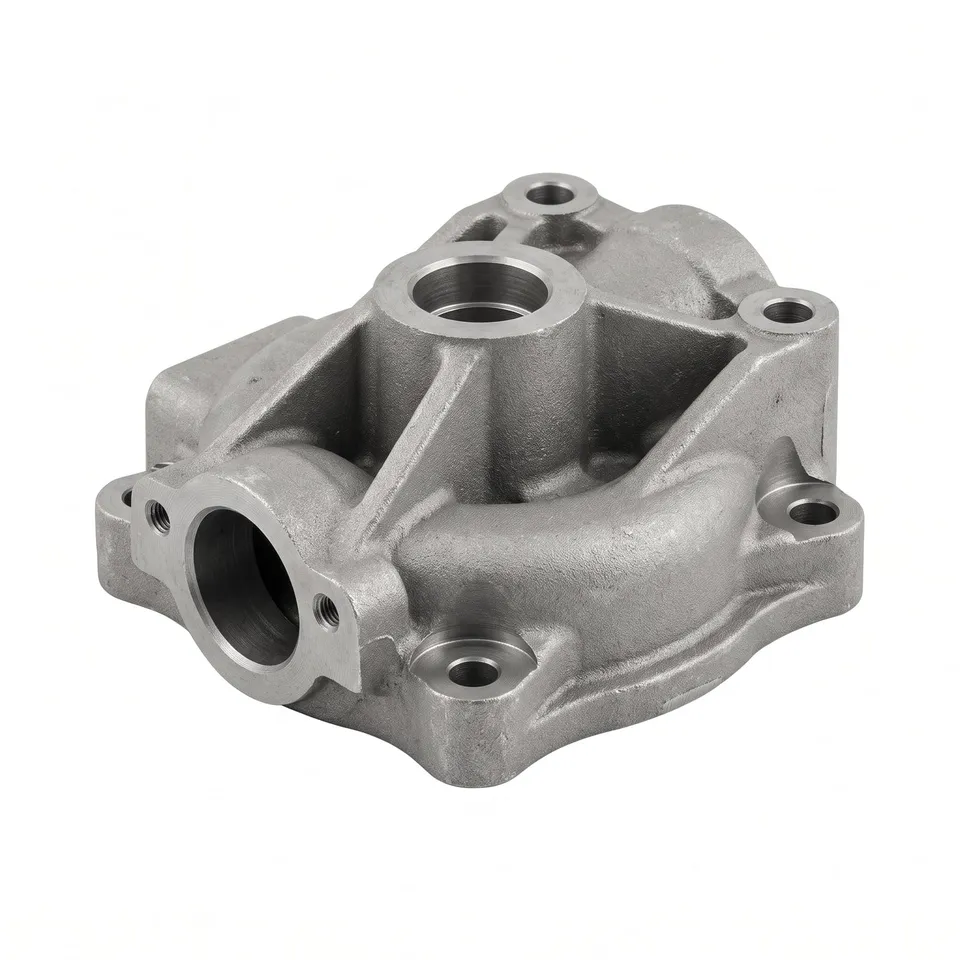 Sand cast · steelBores machined to spec
How a sand-cast part is made.
It takes four steps, all on one quote, and the tooling costs far less than a steel die.
Why sand
Cast it before the volume pays for a die.
Low tooling cost
A pattern, not a hardened die — short runs make sense.
Large and heavy parts
From a few hundred grams to several hundred kilos.
Iron, steel, aluminum, bronze
Gray and ductile iron, cast steel, aluminum and bronze.
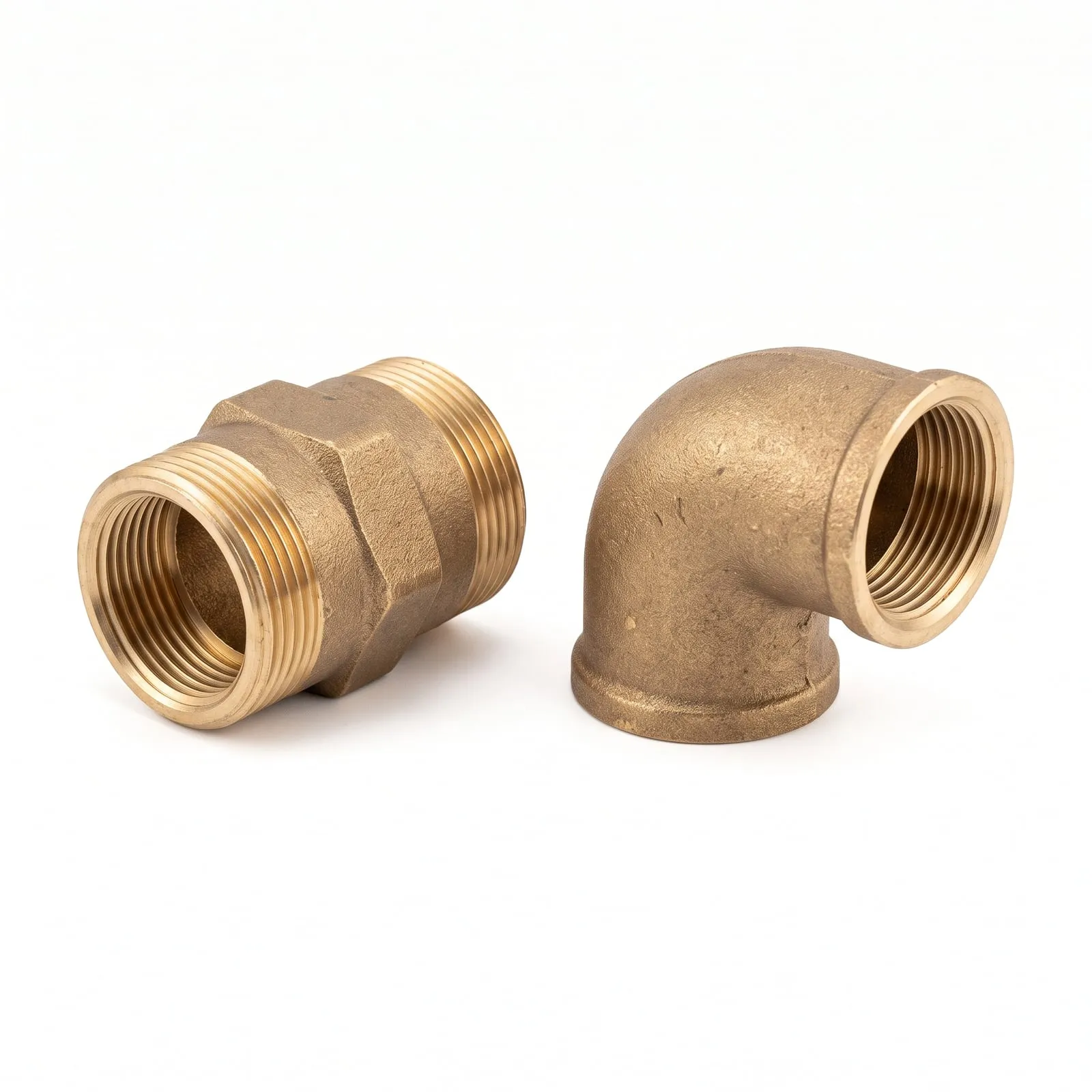 Sand cast · brass
Sand casting, defined
Sand casting packs bonded sand around a reusable pattern to form a mold, pours in molten metal, then breaks the mold to free the part. The pattern costs far less than a steel die, so it is the process for large parts, heavy sections and low-to-medium volumes — machined afterwards where tolerance matters.
Everything about sand casting
Spec sheet
Materials
Choosing a process
What to send
What you send, and what you get back.
The 3D model and the PDF drawing are enough.
Your 3D model (STEP) and the 2D PDF drawing
The model gives the geometry and, with it, the weight; the drawing carries what the model cannot say: tolerances, critical dimensions and the surfaces to machine. Material grade and quantity are chosen when you upload the part.
A price per part, in 24–48 hours
With the unit price and the lead time of every part; the pattern is shown apart.
If it can’t be cast as drawn, the change it needs
We tell you before anything is made, and requote it.
Questions
Questions about sand casting
From what quantity does sand casting pay off, and when is it cheaper than die casting?
It depends on the part and the quantity. Sand casting only needs a pattern — a fraction of the cost of a hardened steel die — so it wins when volumes are low to medium, or when the part is large or heavy and a die cost can’t be spread over a big run. Where the crossover with die casting sits depends on the part, and we say so in the quote, with the pattern shown apart from the price per part.
How big a part can you cast?
From small brackets of a few hundred grams up to castings weighing several hundred kilos. Size is one of sand casting's advantages — it handles heavy sections that die casting and machining-from-billet can't reach economically.
Do I need machining, and can finishing go in the same order?
As-cast surfaces are relatively loose by design. We add machining stock from the pattern stage and machine the faces, bores and threads that need real tolerance, so the finished part fits — you do not get a raw casting to farm out. Coating, assembly and packaging can go in the same order.
Gray iron, ductile iron or steel?
Gray iron damps vibration and is cheap, ideal for machine bases, housings and brackets. Ductile (nodular) iron adds tensile strength and impact resistance for parts that carry load or take shocks. Cast steel, in carbon and low-alloy grades, is for high-load structural and wear parts. We pick by what the part has to survive.
Which files do I need to send?
The 3D model as a STEP file and the 2D drawing as a PDF. The model gives the geometry; the drawing carries what the model cannot say, such as tolerances, critical dimensions and the surfaces to machine. Material grade and quantity are chosen when you upload the part.
How long does the quote take, and is my file confidential?
Between 24 and 48 hours from the moment you upload the files, with a price per part and the lead time of each one. A mutual NDA is in place before you upload any file. If the part can’t be cast as drawn, we tell you the change it needs before anything is made.
Is the pattern shown apart from the price per part?
Yes. In the quote the pattern is its own line, so you see what the pattern costs and what each part costs. The pattern is a one-time cost, much lower than a die; the price per part is the price of every part that comes off it.
Who owns the pattern, and where does it stay?
The pattern is made for your part and it is yours; in the quote it appears as its own cost. It stays and runs in our shops and is not shipped; it is reused for the whole run and kept for repeats, so re-orders skip the tooling step. If you need the terms on moving the pattern, ask us before you accept the quote.
Sand casting or CNC machining? And what if sand casting isn’t right for my part?
A big, heavy part is cast near shape and machined where it counts, instead of cut from a block; for few parts, or a small precise one, CNC machining is usually the better choice. We work from a single part to production runs. If sand casting is not right — a small, thin-walled, high-volume part is better die-cast — we say so at quoting and requote under the process that fits. Asking for a quote commits you to nothing.
Related capabilities
Get started
Upload your part and get its quote.
Upload one part or your whole BOM.
You get a price and lead time in 24–48 h.
Your parts protected by an NDA.