


Urethane casting
Urethane casting: plastic parts without a steel mold.
- Short runs of production-looking parts
- Silicone molds, no steel mold to pay for
- ABS-, PP- or rubber-like resin, in your color
- A price per part, in 24–48 hours
Your parts protected by an NDA.
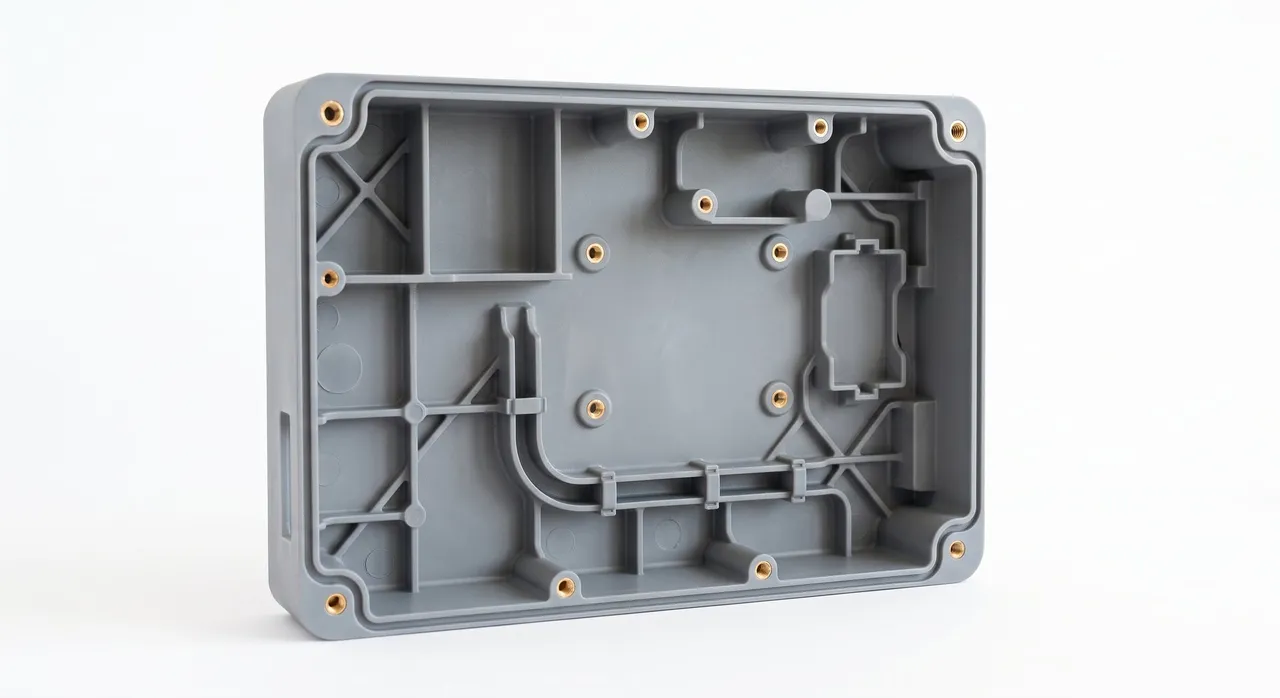 Cast · ABS-like urethaneInserts cast in
It starts with a master.
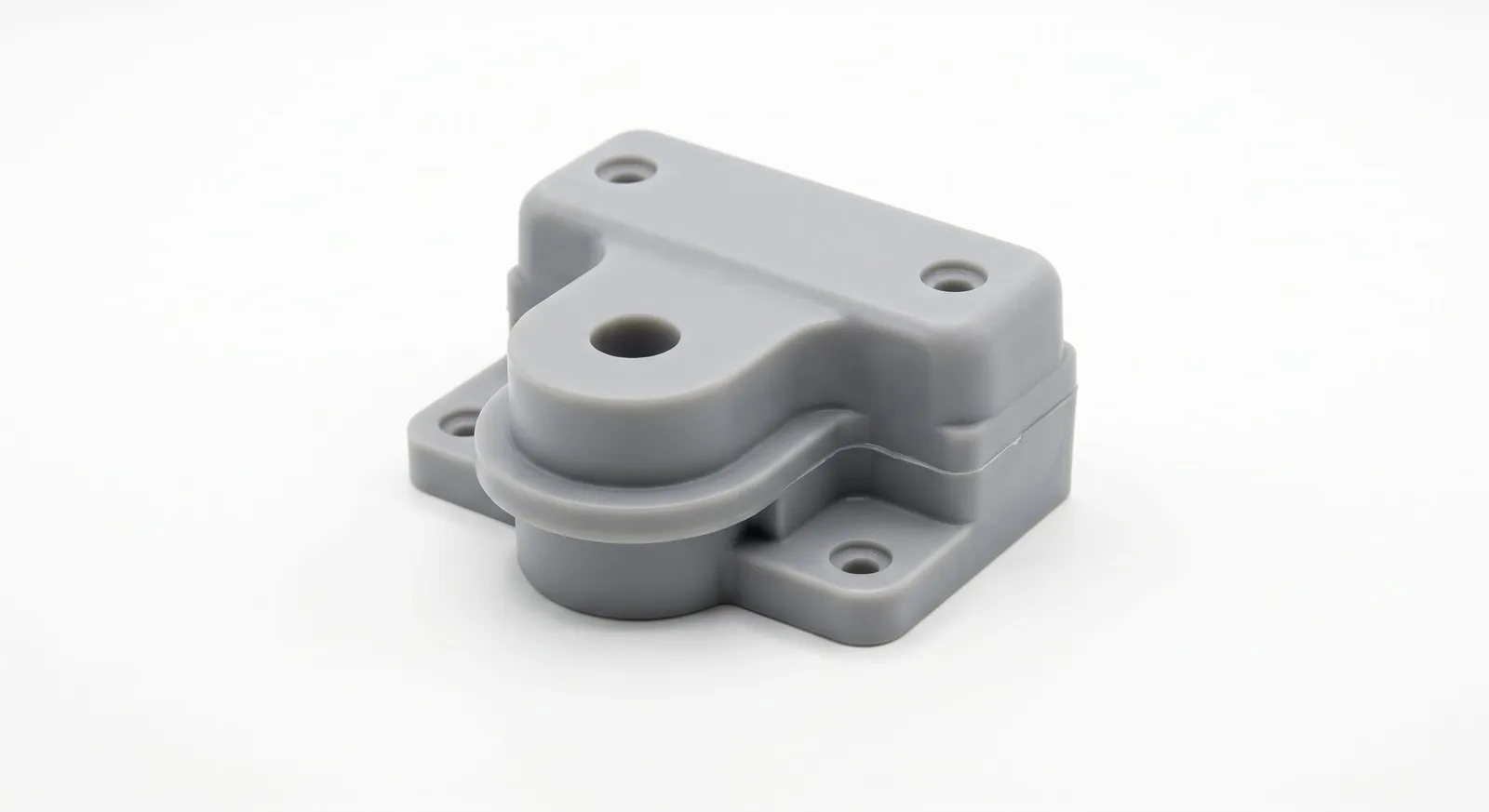 Cast from a silicone mold
Resins
The resins mimic production plastics.
Rigid, soft, clear or in your color, each part is cast to look and feel like the one from the production mold.
Urethane casting, defined
Urethane (vacuum) casting takes a silicone mold from a master — usually 3D-printed or machined — and casts polyurethane into it under vacuum. Each mold gives tens of parts, so it bridges 3D printing and injection molding: production-looking plastic parts in low volume, without a hard tool.
What to send
What you send, and what you get back.
The 3D model and the PDF drawing are enough.
Your 3D model (STEP) and the 2D PDF drawing
The model gives the geometry; the drawing carries what the model cannot say: tolerances and critical dimensions. Resin or look, colour, finish and quantity are chosen when you upload the part.
A price per part, in 24–48 hours
With the unit price and the lead time of every part.
If it can’t be cast as drawn, the change it needs
We tell you before anything is made, and requote it.
Everything about urethane casting
Spec sheet
Materials
Choosing a process
Questions
Questions about urethane casting
How many parts can one silicone mold make?
Around 20–50 parts before the mold wears, depending on the resin and the geometry. For larger runs we take several molds from the same master, so the quantity scales while the master stays the reference.
Urethane casting or injection molding: where is the crossover?
Casting suits tens to a few hundred parts with a production-like finish and no steel tool to pay for. As the quantity grows, the lower price per part of an injection mold overtakes re-casting silicone molds. Where exactly that happens depends on the part and the resin; if your quantity points to injection, we say so and requote.
Can the parts really look like ABS, PP, rubber or clear plastic?
Yes. Polyurethane resins are formulated to mimic rigid plastics like ABS and PP, flexible rubber across a range of Shore hardnesses, and water-clear optical resin. Parts are color-matched, textured and finished so they look like the production part, not a prototype.
What do I need to send?
Your 3D model (STEP) and the 2D PDF drawing. We make the master pattern — usually an SLA print or a machined part — take the silicone mold from it and cast the parts. Resin or look, colour, finish and quantity are chosen when you upload the part.
What tolerances can I expect?
Tolerances are looser than injection molding, but fine for fit, form and function checks and pre-series units. Mark the critical dimensions on the PDF drawing and we tell you whether casting holds them before anything is made; for tight-tolerance production, that is the point to move to injection.
Who owns the silicone mold, and where does it stay?
That is agreed with you when we quote. If it matters for your project, ask us before you accept the quote.
Can colour, texture and packing go in the same order?
Yes. Colour, texture and polish are done on the cast part; finishing, assembly and packaging are quoted and produced under the same order.
How long does the quote take, and what does it show?
Between 24 and 48 hours from the moment you upload the files, with a price per part and the lead time of each one. If the part can’t be cast as drawn, we tell you the change it needs before anything is made.
Can I order a single part, or only runs?
We work from a single part to production runs. For one or two parts, 3D printing is usually the better choice; casting wins at tens, with production resins and colour. If another process fits better, we say so and requote.
Where are the parts made, and is my design kept confidential?
Production is in Europe and Asia. A mutual NDA is in place before you upload any file.
Related capabilities
Get started
Upload your part and get its quote.
Upload one part or your whole BOM.
You get a price and lead time in 24–48 h.
Your parts protected by an NDA.