


Waterjet cutting
Waterjet cutting: a cold cut for thick material.
- Reflective metals, stone and glass
- No heat-affected zone
- An edge that is usually ready to use
- A price per part, in 24–48 hours
Your parts protected by an NDA.
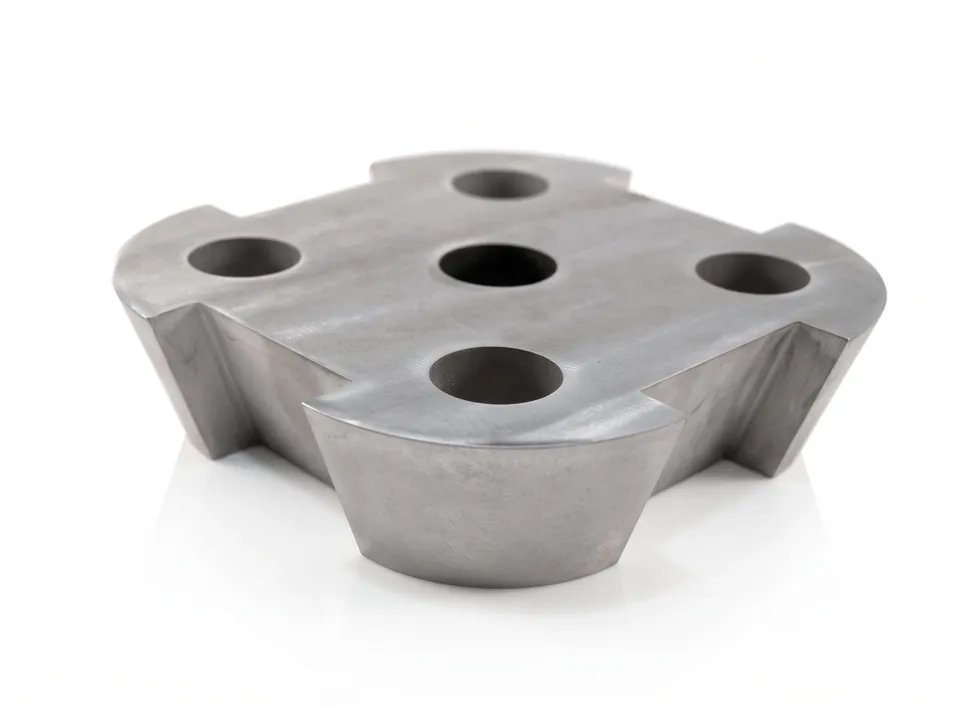 Waterjet · thick steelNo heat-affected zone
It cuts what a laser can’t.
That means thick, reflective or heat-sensitive metal, and materials that are not metal at all.
Nested on the plate
Sharing a plate lowers each part’s cost.
Your parts share the plate and common-line cuts, so material and cutting time are shared too.
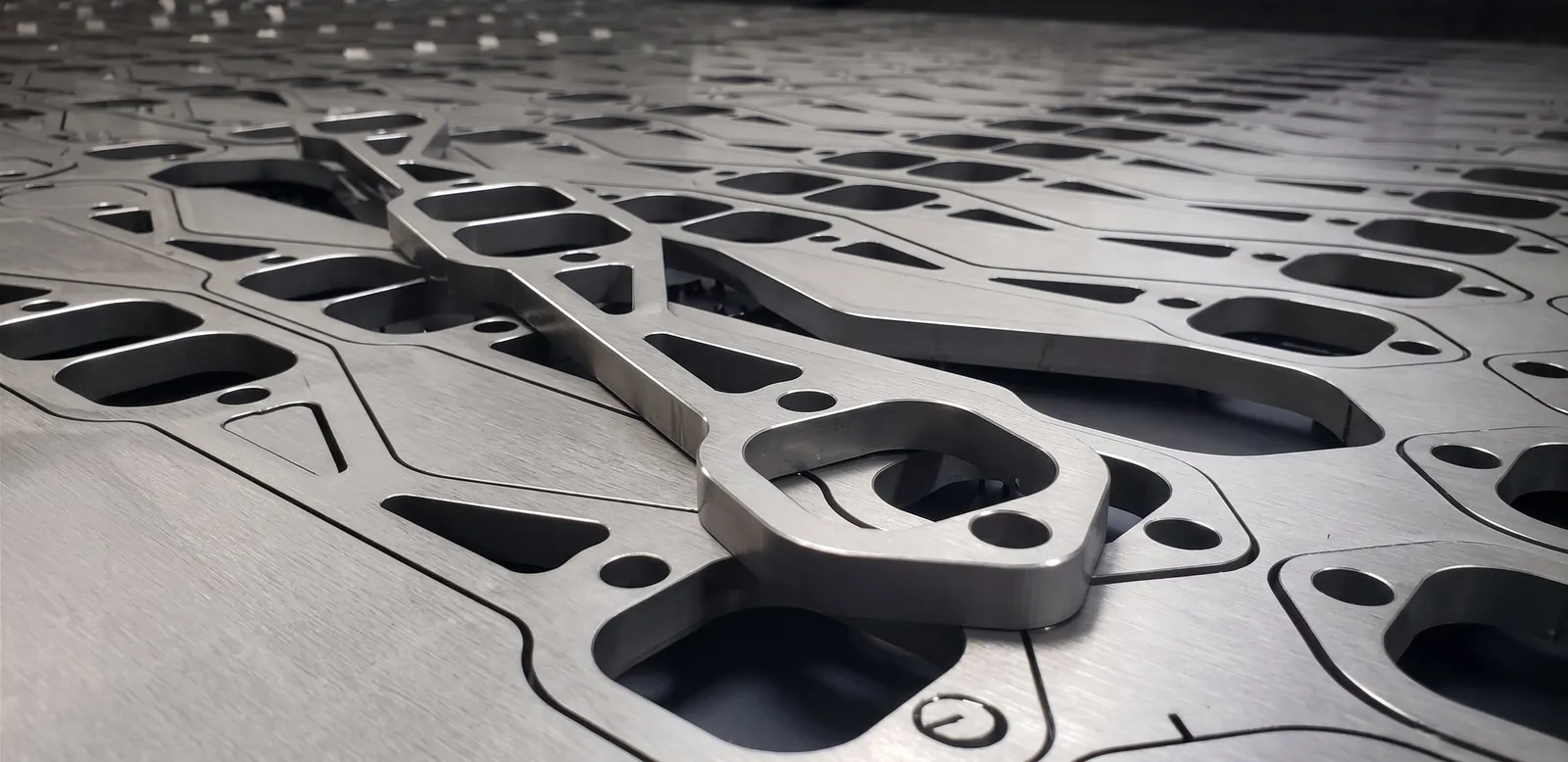 Waterjet · nested plate
Waterjet cutting, defined
Abrasive waterjet cuts with a high-pressure stream of water and garnet through a fine nozzle. It cuts cold — no heat-affected zone, no melting, no burnt edge — so it takes thick plate, reflective and heat-sensitive metals, and stone, glass and composites a laser cannot.
Everything about waterjet cutting
Spec sheet
Materials
Choosing a process
What to send
What you send, and what you get back.
The 3D model and the PDF drawing are enough.
Your 3D model (STEP) and the 2D PDF drawing
The model gives the geometry; the drawing carries what the model cannot say: critical dimensions and the edge quality each face needs. Material, thickness and quantity come with the part.
A price per part, in 24–48 hours
With the unit price and the lead time of every part.
If it can’t be cut as drawn, the change it needs
We tell you before anything is made, and requote it.
Questions
Questions about waterjet cutting
When should I choose waterjet over laser cutting?
When heat is the problem. Laser is faster and cheaper on thin steel and stainless, but waterjet wins on thick plate, reflective metals like copper and brass, heat-sensitive or hardened alloys, and non-metals like stone, glass and composites — anything where a heat-affected zone or a burnt edge will not do. If waterjet is not the right cut for your part, we say so and requote it: thin steel in volume as laser cutting, a three-dimensional part as machining.
What decides the cost of a waterjet-cut part?
The material and its thickness, the length of the cut and how many pierces it needs, and the quantity. Parts that share a plate and common-line cuts between them bring the cost down. You get a price per part in 24–48 hours, so you see the cost of each part, not one figure for the whole job.
What files do I need to send?
A STEP file of the part and a 2D PDF drawing. The model gives the geometry; the drawing carries the critical dimensions and the edge quality each face needs.
Can I order a single part?
Yes. Orders run from one part to production runs, and every part has its own price. The more parts share a plate, the lower the cost of each.
How thick can you cut?
Steel up to about 50 mm, stainless steel and aluminum up to about 40 mm and titanium up to about 30 mm, in a single cold pass — well past what the fiber laser takes. We confirm the limit for your exact material and edge requirement at quoting.
What is a heat-affected zone, and why does waterjet avoid it?
Thermal cutting melts the material, leaving a band along the edge that is hardened, tempered or distorted by heat — the heat-affected zone. Waterjet cuts cold with water and abrasive, so there is no HAZ, no hardening and no distortion; the edge is unchanged and usually ready to use.
What tolerance and edge quality can I expect?
Around ±0.1 mm on typical parts, with a clean, square edge. Because there is no burn, most parts need no secondary cleanup before welding, forming or use.
Can you really cut glass, stone and composites?
Yes — abrasive waterjet cuts non-metals a laser can't cut cleanly, including stone, glass, ceramic and composite laminates, without the heat that would crack or delaminate them.
Can bending and finishing be in the same order?
Yes. A cut part can go on to bending, finishing, assembly and packaging in the same order, so it comes back ready to use rather than as a flat blank.
Is my drawing confidential?
Yes. A mutual NDA is signed before you upload, so your drawings and models are covered from the first file.
Related capabilities
Get started
Upload your part and get its quote.
Upload one part or your whole BOM.
You get a price and lead time in 24–48 h.
Your parts protected by an NDA.